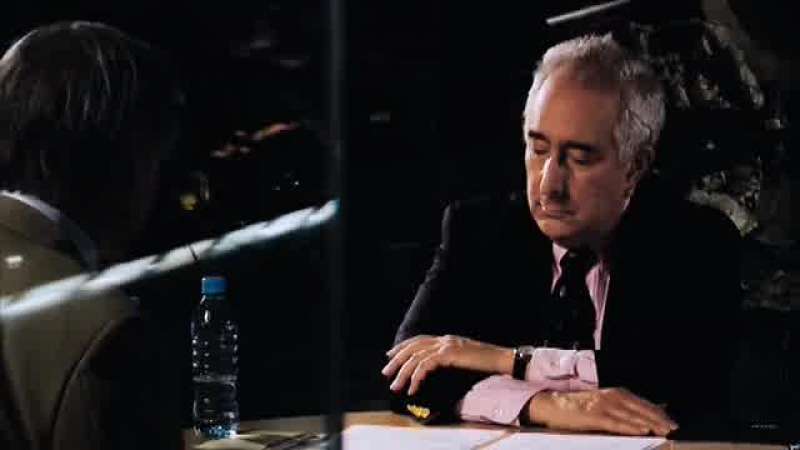

So professor Dawkins was not against intelligent design, just certain types of designers....
Join the conversation
Log in or create an account to leave a comment
Log In
Ben Stein:
What do think is the possibility that there then, intelligent design might turn out to be the answer to some issues in genetics... or in evolution? Richard Dawkins:
Well... it could come about in the following way: it could be that uh, at some earlier time somewhere in the universe a civilization e-evolved... by probably by some kind of Darwinian means to a very very high level of technology and designed a form of life that they seeded onto... perhaps this... this planet. Um, now that is a possibility. And uh, an intriguing possibility. And I suppose it's possible that you might find evidence for that if you look at the um, at the detail... details of our chemistry molecular biology you might find a signature of some sort of designer. Ben Stein:
[voice over]
Wait a second. Richard Dawkins thought intelligent design might be a legitimate pursuit? Richard Dawkins:
Um, and that designer could well be a higher intelligence from elsewhere in the universe. But that higher intelligence would itself would have to come about by some explicable or ultimately explicable process. It couldn't have just jumped into existence spontaneously. That's the point. Ben Stein:
[voice over]
So professor Dawkins was not against intelligent design, just certain types of designers. Such as God
What do think is the possibility that there then, intelligent design might turn out to be the answer to some issues in genetics... or in evolution? Richard Dawkins:
Well... it could come about in the following way: it could be that uh, at some earlier time somewhere in the universe a civilization e-evolved... by probably by some kind of Darwinian means to a very very high level of technology and designed a form of life that they seeded onto... perhaps this... this planet. Um, now that is a possibility. And uh, an intriguing possibility. And I suppose it's possible that you might find evidence for that if you look at the um, at the detail... details of our chemistry molecular biology you might find a signature of some sort of designer. Ben Stein:
[voice over]
Wait a second. Richard Dawkins thought intelligent design might be a legitimate pursuit? Richard Dawkins:
Um, and that designer could well be a higher intelligence from elsewhere in the universe. But that higher intelligence would itself would have to come about by some explicable or ultimately explicable process. It couldn't have just jumped into existence spontaneously. That's the point. Ben Stein:
[voice over]
So professor Dawkins was not against intelligent design, just certain types of designers. Such as God
Full Transcript
00:00:01.000 --> 00:00:06.007
Now that is a possibility and an intriguing possibility
00:00:06.008 --> 00:00:09.005
and I suppose it's possible that you might find evidence for that
00:00:09.004 --> 00:00:12.009
If you look at the detail
00:00:13.000 --> 00:00:15.007
details of biochemistry molecular biology
00:00:15.007 --> 00:00:19.000
you might find a signature of some sort of designer
00:00:19.000 --> 00:00:20.003
Wait a second
00:00:20.003 --> 00:00:23.002
Richard Dawkins thought Intelligent Design
00:00:23.001 --> 00:00:25.000
might be a legitimate pursuit
00:00:25.000 --> 00:00:29.001
And that designer could well be a higher intelligence
00:00:29.001 --> 00:00:31.007
from elsewhere in the universe
00:00:31.008 --> 00:00:33.004
Well But that higher intelligence
00:00:33.004 --> 00:00:35.008
would itself have had to have come about
00:00:35.008 --> 00:00:40.000
by some explicable or ultimately explicable process
00:00:40.000 --> 00:00:43.007
It couldn't have just jumped into existence spontaneously That's the point
00:00:43.007 --> 00:00:48.004
So professor Dawkins was not against Intelligent Design
00:00:48.004 --> 00:00:51.001
just certain types of designers
00:00:51.001 --> 00:00:53.001
such as God
Want This Clip in HD?
Upgrade for HD/4K downloads and unlimited access. Upgrade now →
Movie Summary
Ben Stein examines the issue of academic freedom and decides that there is none when it comes to the debate over intelligent design.