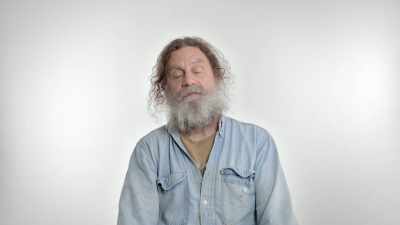
![[narrator] It’s as if long-term meditators view pain as a neutral event](https://clip.cafe/img800/narrator-it-rsquo-s-if-long-term-meditators-view-pain-a-neutral-event.jpg)

It’s as if long-term meditatorsview pain as a neutral event, not an emotional ordeal. In...
Join the conversation
Log in or create an account to leave a comment
Log In
[narrator] It’s as if long-term meditators
view pain as a neutral event, not an emotional ordeal. In 1963, a Vietnamese Buddhist monk
named Thich Quang Duc set himself on fire
to protest the ruling regime. A reporter wrote,
“As he burned he never moved a muscle, never uttered a sound.” When most of us see
a disturbing image like this, our amygdalas light up and tell us this
is something that we should focus on. But a study found that the more
meditation experience someone has, the less their amygdalas react
to these kinds of images. That could be because the connection between the emotional part
and the regulatory part of the brain has been strengthened
by mindfulness training. Expert meditators, like all of us, can’t fully control what happens
in their lives, but they have much better control over
how they respond. And that can be a powerful tool
when tensions are high. [woman] How can you
have something happen and
view pain as a neutral event, not an emotional ordeal. In 1963, a Vietnamese Buddhist monk
named Thich Quang Duc set himself on fire
to protest the ruling regime. A reporter wrote,
“As he burned he never moved a muscle, never uttered a sound.” When most of us see
a disturbing image like this, our amygdalas light up and tell us this
is something that we should focus on. But a study found that the more
meditation experience someone has, the less their amygdalas react
to these kinds of images. That could be because the connection between the emotional part
and the regulatory part of the brain has been strengthened
by mindfulness training. Expert meditators, like all of us, can’t fully control what happens
in their lives, but they have much better control over
how they respond. And that can be a powerful tool
when tensions are high. [woman] How can you
have something happen and
Full Transcript
00:00:01.000 --> 00:00:04.067
[narrator] It’s as if long-term meditators
view pain as a neutral event,
00:00:04.795 --> 00:00:06.756
not an emotional ordeal.
00:00:08.997 --> 00:00:12.999
In 1963, a Vietnamese Buddhist monk
named Thich Quang Duc
00:00:12.999 --> 00:00:15.097
set himself on fire
to protest the ruling regime.
00:00:15.064 --> 00:00:19.143
A reporter wrote,
“As he burned he never moved a muscle,
00:00:19.268 --> 00:00:20.728
never uttered a sound.”
00:00:21.562 --> 00:00:23.773
When most of us see
a disturbing image like this,
00:00:23.856 --> 00:00:27.485
our amygdalas light up and tell us this
is something that we should focus on.
00:00:28.001 --> 00:00:31.028
But a study found that the more
meditation experience someone has,
00:00:31.364 --> 00:00:34.158
the less their amygdalas react
to these kinds of images.
00:00:34.825 --> 00:00:36.535
That could be because the connection
00:00:36.619 --> 00:00:39.058
between the emotional part
and the regulatory part of the brain
00:00:39.664 --> 00:00:41.999
has been strengthened
by mindfulness training.
00:00:42.375 --> 00:00:44.071
Expert meditators, like all of us,
00:00:44.794 --> 00:00:47.338
can’t fully control what happens
in their lives,
00:00:47.755 --> 00:00:50.675
but they have much better control over
how they respond.
00:00:50.967 --> 00:00:54.047
And that can be a powerful tool
when tensions are high.
00:00:54.637 --> 00:00:57.723
[woman] How can you
have something happen and...
Want This Clip in HD?
Upgrade for HD/4K downloads and unlimited access. Upgrade now →
Movie Summary
Ever wonder what's happening inside your head? From dreaming to anxiety disorders, discover how your brain works with this illuminating series.

![[audience laughs] - The Mind, Explained](https://clip.cafe/img400/audience-laughs-s628.jpg)


![[narrator] For hundreds of years,
forest-dwelling shamans - The Mind, Explained](https://clip.cafe/img400/narrator-for-hundreds-of-years-forest-dwelling-shamans.jpg)
![[narrator] Lab rats seem to dream - The Mind, Explained](https://clip.cafe/img400/narrator-lab-rats-seem-dream.jpg)
![[narrator] Some people drink to relax. - The Mind, Explained](https://clip.cafe/img400/narrator-some-people-drink-relax.jpg)
![[narrator] It looks like REM sleep
doesn't just help us remember, - The Mind, Explained](https://clip.cafe/img400/narrator-it-looks-like-rem-sleep-doesnt-just-help-us-remember.jpg)

![[narrator]
The practice was forced underground. - The Mind, Explained](https://clip.cafe/img400/narrator-the-practice-forced-underground.jpg)


![[narrator] This selective forgetfulness - The Mind, Explained](https://clip.cafe/img400/narrator-this-selective-forgetfulness.jpg)
![[Jerry] Breathing allows you
to think about - The Mind, Explained](https://clip.cafe/img400/jerry-breathing-allows-you-to-think-about.jpg)