
Nurses' aides in nursing homes without the protectiveequipment or training they neededto...
Join the conversation
Log in or create an account to leave a comment
Log In
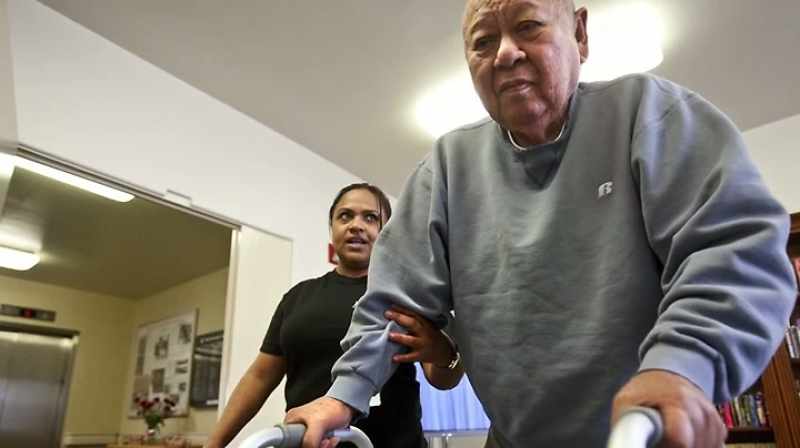
Nurses' aides in nursing homes without the protective
equipment or training they needed
to be safe and secure. Individuals who have jobs that were considered
essential jobs, they're stocking
grocery shelves and helping to pick up trash
in communities and sweep the streets. While many affluent Americans worked on computers at home, low-paid essential workers, many without masks
and the ability to distance, were jammed
into sites of contagion like delivery depots,
industrial farms, factories, funeral homes,
and meatpacking plants. If the impact of the disease
was divided by occupation, it was also sundered
by age and race. My grandmother used to say, "You know, when the country
gets the flu, black people get pneumonia." It's well-known in our circles
that we have worse outcomes when it comes to a lot
of these different diseases, you know, and part of that
is systemic racism
equipment or training they needed
to be safe and secure. Individuals who have jobs that were considered
essential jobs, they're stocking
grocery shelves and helping to pick up trash
in communities and sweep the streets. While many affluent Americans worked on computers at home, low-paid essential workers, many without masks
and the ability to distance, were jammed
into sites of contagion like delivery depots,
industrial farms, factories, funeral homes,
and meatpacking plants. If the impact of the disease
was divided by occupation, it was also sundered
by age and race. My grandmother used to say, "You know, when the country
gets the flu, black people get pneumonia." It's well-known in our circles
that we have worse outcomes when it comes to a lot
of these different diseases, you know, and part of that
is systemic racism
Full Transcript
00:00:01.000 --> 00:00:04.972
Nurses' aides in nursing homes
00:00:05.996 --> 00:00:06.874
without the protective
equipment or training
00:00:06.906 --> 00:00:09.001
they needed
to be safe and secure.
00:00:09.109 --> 00:00:11.611
Individuals who have jobs
00:00:11.645 --> 00:00:13.849
that were considered
essential jobs,
00:00:13.881 --> 00:00:16.183
they're stocking
grocery shelves
00:00:16.216 --> 00:00:19.022
and helping to pick up trash
in communities
00:00:19.254 --> 00:00:22.524
and sweep the streets.
00:00:22.556 --> 00:00:24.192
While many affluent Americans
00:00:24.224 --> 00:00:25.559
worked on computers at home,
00:00:25.593 --> 00:00:27.929
low-paid essential workers,
00:00:27.961 --> 00:00:30.631
many without masks
and the ability to distance,
00:00:30.665 --> 00:00:32.868
were jammed
into sites of contagion
00:00:32.901 --> 00:00:35.903
like delivery depots,
industrial farms, factories,
00:00:35.937 --> 00:00:39.207
funeral homes,
and meatpacking plants.
00:00:39.239 --> 00:00:42.051
If the impact of the disease
was divided by occupation,
00:00:42.542 --> 00:00:46.413
it was also sundered
by age and race.
00:00:46.447 --> 00:00:47.949
My grandmother used to say,
00:00:47.982 --> 00:00:49.417
"You know, when the country
gets the flu,
00:00:49.045 --> 00:00:51.118
black people get pneumonia."
00:00:51.152 --> 00:00:54.956
It's well-known in our circles
that we have worse outcomes
00:00:54.988 --> 00:00:57.658
when it comes to a lot
of these different diseases,
00:00:57.692 --> 00:01:00.462
you know, and part of that
is systemic racism.
Want This Clip in HD?
Upgrade for HD/4K downloads and unlimited access. Upgrade now →
Movie Summary
An in-depth look at how the United States government handled the response to the COVID-19 outbreak during the early months of the pandemic.